
Wendy Zimmermann · 18 September 2026
AI Tools Transform Career Guidance as Vocational Investments Grow and International Enrollments Rise
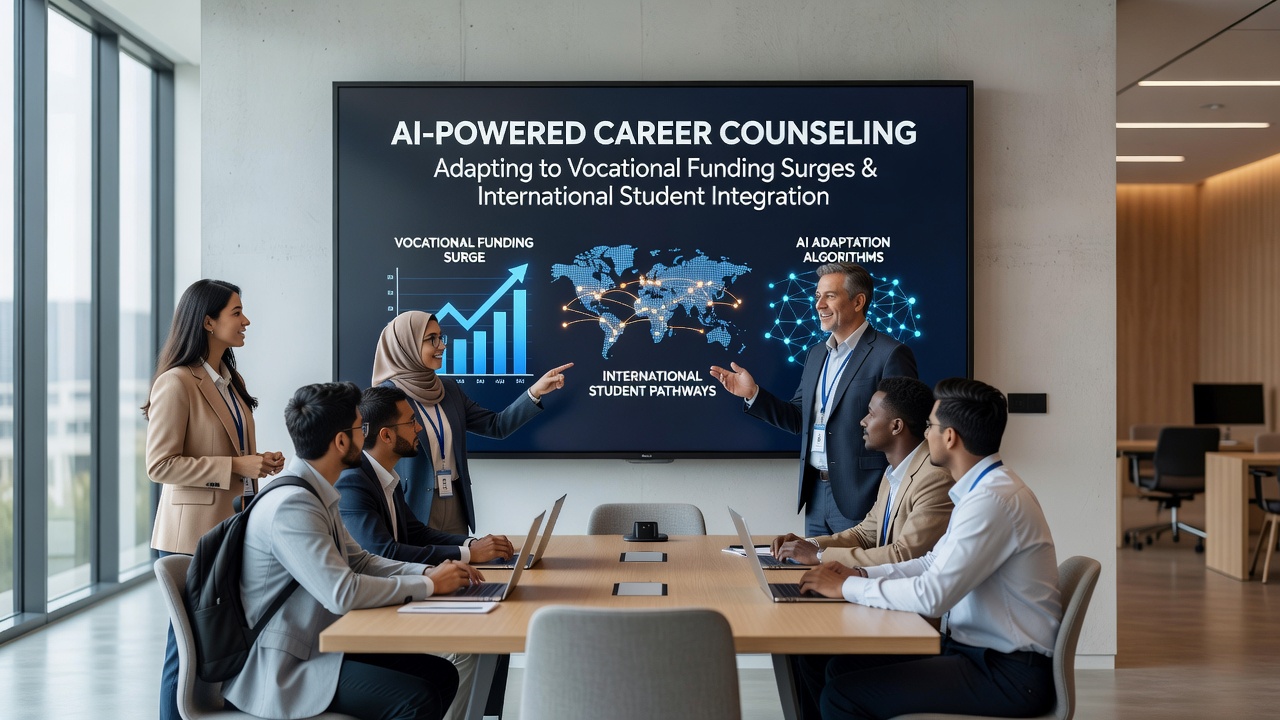
Vocational funding has expanded across multiple regions in recent years, and AI-powered career counseling platforms have adjusted their algorithms to match the new financial streams with learner profiles. Governments in Europe, North America, and parts of Asia have directed larger portions of education budgets toward skills-based programs, while enrollment data from international students continues to climb. Observers note that these parallel developments have created fresh requirements for counseling systems that once focused mainly on domestic job markets.
Funding Shifts Drive Platform Updates
Recent budget allocations show vocational training programs receiving increased support in countries such as Germany, Canada, and Australia, where public reports document rises of 15 to 25 percent in dedicated spending between 2023 and 2025. AI counseling tools now incorporate live data feeds from these funding sources so that recommendations reflect available grants, apprenticeships, and subsidized courses. One study released by the OECD in 2025 tracked how institutions integrated these feeds into student-facing dashboards, allowing users to filter options by cost coverage and regional demand. Platforms adjust suggestions dynamically when new funding rounds open, which reduces the time students spend searching for financial support.
International Student Data Integration
International student numbers have rebounded past pre-pandemic levels in many host countries, and counseling systems must account for visa timelines, credential recognition, and post-study work rights that vary by nation. AI models trained on global mobility statistics now factor in these variables alongside local labor market projections. Researchers at several universities have tested systems that cross-reference enrollment trends from UNESCO data with job vacancy reports from national statistics offices, producing pathways that align study choices with realistic employment outcomes. The result appears in features that flag programs offering language support or bridge courses for students arriving from different education systems.
Algorithm Adjustments for September 2026 Intake
Planning cycles for the September 2026 academic year have already begun, and developers report that AI counseling engines are being recalibrated to handle expected surges in applications from regions showing strong growth in outbound mobility. Data from education ministries in India, Nigeria, and Vietnam indicate continued interest in technical and vocational fields, prompting platforms to expand language options and add filters for programs that accept non-traditional entry qualifications. Those adjustments occur through regular model retraining sessions that incorporate fresh enrollment statistics and funding announcements released each quarter.
Case Examples From Institutions
One technical college in Ontario integrated an AI counseling module that pulls real-time information from both provincial skills grants and federal immigration pathways, resulting in a reported 30 percent increase in successful program matches for international applicants during the 2024-2025 cycle. A similar rollout at a polytechnic in Singapore combined local workforce development funds with ASEAN mobility agreements, allowing the system to surface apprenticeships that include relocation support. Observers tracking these implementations note that the common element is the use of structured data pipelines rather than manual updates, which keeps recommendations current as policies change.
Challenges in Data Accuracy and Access
Despite progress, gaps remain in the datasets used to train these systems, particularly around credential equivalency for students from less-represented countries. Research teams continue to test methods for improving accuracy, including partnerships with credential evaluation services that supply standardized mappings. Privacy regulations in the European Union and several Asian jurisdictions also influence how platforms store and process personal information, requiring explicit consent layers before any cross-border data sharing occurs. Institutions that have addressed these constraints report smoother integration with existing student information systems.
Future Data Sources and Partnerships
Industry groups such as the World Bank education division and national labor agencies in multiple countries have begun releasing aggregated datasets that counseling platforms can incorporate under controlled access agreements. These sources add depth to projections about emerging occupations and regional skill shortages, which in turn refines the advice delivered to both domestic and international users. Developers emphasize that ongoing validation against actual placement rates remains essential for maintaining trust in the outputs.
Conclusion
AI-powered career counseling continues to evolve in response to increased vocational funding and rising international student mobility, with platforms adapting through live data integration and refined matching algorithms. The changes observed through 2025 and into planning for 2026 reflect broader shifts in how education systems connect learners with funded opportunities across borders. Continued attention to data quality and regulatory compliance will determine how effectively these tools serve expanding user groups in the years ahead.